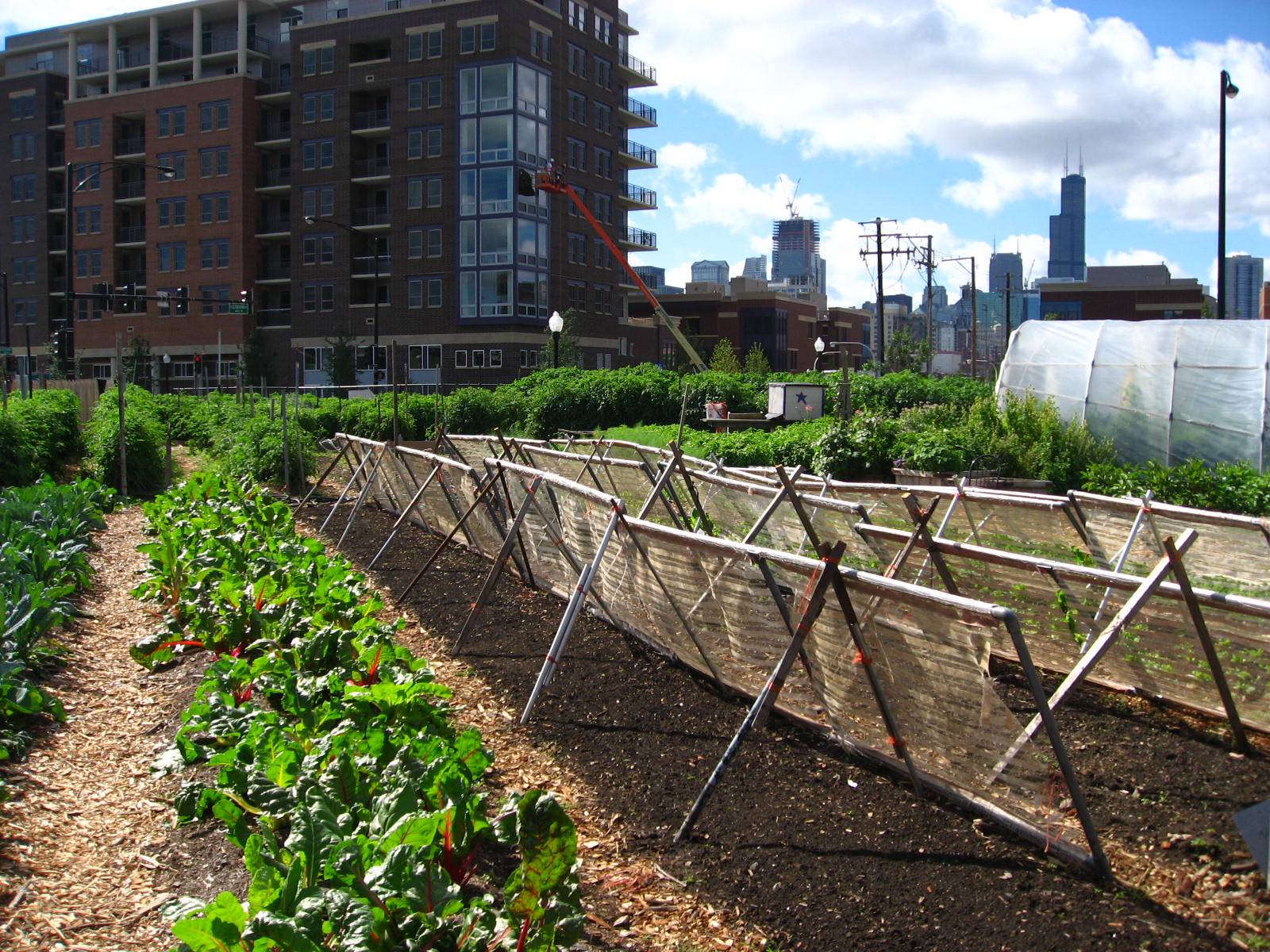
Urban agriculture is a new concept that is quickly being embraced by city planners around the world, as a sustainable and effective strategy of land use within urban spaces. As world population continues to expand, food sources will be continually depleted by this increase, as well as the increase in land being used by humans in areas other than agricultural production, threatening the ability to provide enough food for all people. A solution to this problem would be the development of urban agriculture within cities and suburban areas, allowing residents of a certain area to self-produce and self-consume those foods that they most want, while utilizing space more efficiently and reducing transport costs and pollution. In addition, urban agriculture contributes to sustainable design and planning, allowing for more productive use of spaces, and also tackling such issues as urban waste and air pollution. There are so many positive aspects of this type of land use; it is a wonder that it is not more widespread.
Urban agriculture can be divided into two types, intra-urban or within cities, or peri-urban, including suburban areas and small towns and cities. It can be instituted as part of buildings or the open land surrounding them, within parks and public lands, or even on the vacant and unused lots within found almost everywhere. Many cities currently incorporate urban agriculture into their infrastructure, one of these being Chicago, who’s City Farm provides produce, jobs, and agricultural education to the people of the city. Seattle has recently declared 2010 to be the year of urban agriculture, with its efforts to encourage urban agriculture within all unused plots of land. Others have considered expanding urban agriculture into buildings themselves, suggesting that skyscrapers can be converted into multi-level sustainable food production facilities known as sky farms. This allows for more effective and sustainable uses of already standing buildings. All of these systems allow for a sustainable and more environmentally friendly urban infrastructure.
The system of urban agriculture is very effective because of the various positive effects it can have on a city, many often transcend land use issues alone. First and foremost, this type of planning addresses the issue of food security, allowing for the production of produce within urban spaces. The government of Australia is one of many countries encouraging this type of agriculture as a solution to food shortages. Next, urban agriculture assists economic development through the production and the valuation of unused lands. It even offers a solution to waste disposal because it can make use of wastewaters and organic wastes. Finally, it addresses land use issues by offering sustainable and economically viable uses for unused land, creating green spaces within urban settings. Ultimately urban agriculture addresses multiple issues and offers a sustainable solution to land use within urban and suburban spaces, by utilizing unused land in a way that benefits the town both in terms of economic development and infrastructure, without negatively impacting the environment.

Nice article. It reminds me of a movie I watched a few years ago (documentary) in which Cuba began a massive program of urban agriculture to address severe food shortages after the Soviet Empire fell and the Cubans' primary source of oil disappeared more or less overnight. I believe the Cubans were able to produce about 50% of the food needs for Havana within the city limits once they got the program going.
ReplyDeleteYes, I think I may have seen this documentary that is how I was first introduced to the subject. Though, their conversion to this type of agricultural system came out of fundamental need. In contrast, we must engage in this system out of choice, we are not yet threatened by a loss of oil so devastating that we must drastically change our ways. That it is not to say we may not face this type of challenge in the future, which is why it is important to understand how we may institute this system. This is a cultural shift that we must make, so that we can live more sustainable and environmentally friendly lives.
ReplyDeleteI am really interested in the idea of sky farms. I know that it is not uncommon for office space in city high rises to be unused. It seems to me that we should consolidate our space in cites. Whats the point to having a multi floored building if only some of the floors are being utilized. We should be taking advantage of this sun rich real-estate in the sky by growing plants in it. This would not only have a positive impact on the environment but also one society. Malnutrition in poor inner city families is a big issue and if vegetables and plants are being grown in the inner city and sold for cheep, a lot of people would live healthier lives.
ReplyDeleteI’ve also heard of people producing their own food via personal hydroponic gardening. This is practical in high density urban areas when people don’t have access to soil; instead, they use a vertical window farming system to grow produce indoors. The system is largely diy and uses odds and ends such as water bottles, aquarium air pumps, hangers, and etc. (http://www.npr.org/templates/transcript/transcript.php?storyId=125504307). Since its low in space (its hangs vertically next to windows), it is the perfect solution for city-dwellers with green thumbs.
ReplyDelete